
Let’s be honest: writing a great joke is hard.
Delivering it onstage? Harder.
Delivering it well to a room full of half-buzzed strangers with trust issues and tight schedules? That’s a dark art that demands skill, timing, and the mental focus of a monk who’s also being heckled by a bachelorette party. (“What’s under the robe, baldy?“)
But here’s the kicker: most jokes don’t bomb because the joke itself sucks. They bomb because you—yes, YOU—screwed it up in one of ten easily avoidable ways.
So if you want bigger laughs, fewer crickets, and less post-show self-loathing, start here.
1. Half-Memorized = Half-Funny
It’s not improv. It’s not jazz. It’s stand-up comedy—which means you are reciting scripted lines and pretending you just thought of them while scratching your neck. That requires memorization.
If you don’t know your own setup well enough to deliver it without blinking at the ceiling, don’t expect the audience to trust you, or to know when they’re supposed to laugh. And if your punchline arrives late and wobbly like a drunk Uber driver, guess what? No tip. No laugh.
2. Too Fast, Too Slow, Too Screwed
Pacing is everything. Good comedy is music.
Your setup is the verse, the punchline is the chorus, and your tags are the weird bridge with the tambourine. But if you speed through your bit like you’re fleeing a crime scene, or drag it out like a hostage negotiator, the audience won’t know when to clap, laugh, or leave.
Use pacing to build tension, not to test their patience.
3. You’re Too Loud. Or Too Quiet. Or Both.
Volume matters.
Yelling your punchline doesn’t make it funnier—it makes it sound like you just lost an argument in your own head.
Whispering it? That only works if your entire persona is “murderous librarian.”
Modulate. If your setup’s conversational, keep it chill. If your tag hits hard, maybe punch it up. But please, for the love of reverb, don’t just shout the whole bit like you’re headlining at a monster truck rally in hell.
4. Read the Damn Room
You don’t have to change your act—but you do have to change your energy.
Is it a room full of couples? A corporate crowd? A bar with five people, three of whom are asleep? Adjust. Don’t open with your riskiest incest clown joke unless you’re certain you’re at the right county fair.
Pro comics pivot without panic. You don’t need to become someone else—just don’t be the guy doing Tinder jokes for a group of nuns.
5. Sloppy Mouth, Sloppy Laughs
If they can’t understand you, they can’t laugh at you.
Slurring your words, mumbling, or eating the punchline like a shame sandwich doesn’t make you “edgy”—it makes you inaudible. Comedy is precision. Every syllable matters.
So don’t show up buzzed, exhausted, or chewing gum like a bored goat. Show up like you care.
6. Skipping the Setup Is Like Skipping Foreplay
I get it. You want to get to the funny part. But if you skip the setup, you’ve given the audience no frame of reference. It’s like showing them a magic trick without hiding the card.
The setup is what misdirects them into thinking they know where you’re going. The punchline is what yanks the rug out. Skip that setup, and the rug stays put—so does their face.
7. Details Make the Difference
You didn’t “drive a car.” You drove a rusted-out Kia Soul with a missing side mirror and a pine tree air freshener that smells like generational trauma.
Details paint the mental movie. Generic terms = generic laughs. Be specific. Weirdly specific. That’s where the comedy lives.
8. End On the Funny Word, Dammit
It’s called a punch line.
Not a trickle-away-line.
The funniest word should come last. Full stop. If you tag a sentence fragment or nervous chuckle after the punch word, you’ve stepped on your own laugh like it owes you money.
9. Don’t Laugh at Your Own Joke Unless You’re a Sociopath or a Toddler
I get it. You’re nervous.
But if you giggle at your own punchline, it tells the audience:
“I’m not confident in this. Please clap.”
Let them laugh. You stay calm. Be the straight man in your own circus. Nothing kills tension release faster than you turning into a giddy teenager who just made a fart sound with his armpit.
10. Stop With the Ums, Ughs, and Verbal Whack-a-Mole
You’re a comic. Not a malfunctioning Roomba.
Record your set. Play it back. Count your “ums.” Are they cute? No? Kill them. You can’t build momentum if your transitions sound like you’re warming up a lawnmower.
Verbal tics distract from the joke. And distraction is the enemy of laughter. Unless the distraction is the joke—then congrats, you’re weird and I like you.
Final Thought:
Every joke is a fragile little miracle. A balance of tension, release, rhythm, and surprise. If you want your comedy to hit consistently, treat the delivery with the same care you give the writing.
And if you’re screwing up any of these ten?
Good news: you can fix them.
Even better news? Now you know what to fix.
Want help tightening your joke structure, finding your unique voice, or writing better punchlines faster?
Check out Carl Aibot—he’s trained in all this and doesn’t interrupt you with “Um.”
You’re welcome.
Get your FREE copy of The Business of Comedy!
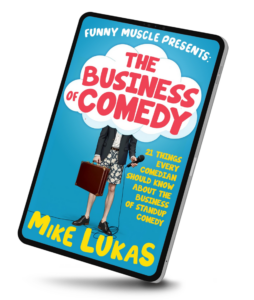
Includes:
- How Comedians are 5-Tool Players
- How to Attract a Following
- How to Get Bookings
- How to Create Multiple Income Streams
- Manager vs Agent
- And More!